breadcrumb arrow breadcrumb arrow
News

News

14.05.2025 11:30
Hazardous and sanctioned ammonium nitrate fully removed from the port area
The Financial Intelligence Unit of Latvia (FIU) informs that the entire stock of ammonium nitrate stored at SIA “Riga Fertilizer Terminal” (RFT) has been fully removed from the terminal by 6 May 2025. This action eliminates a potential environmental hazard that had been linked to storing this cargo. The decision to allow the sale of ammonium nitrate to a merchant registered in Latvia not subject to international sanctions was taken by the FIU on 5 March 2025 with the aim of eliminating a potential environmental risk. Latvian credit institutions have frozen all funds derived from the transaction in compliance with applicable sanctions. The fertilisers were subject to freezing under the sanctions imposed by the European Union in March 2022 in response to Russia’s military aggression against Ukraine. Currently, there are still other fertiliser cargoes at the RFT terminal that are not classified as explosive. These cargoes have been frozen in accordance with international sanctions requirements. Under the supervision of the State Environmental Service, RFT, as the terminal operator, is responsible for the storage of these cargoes and for ensuring compliance with all requirements set by laws and regulations, as well as by competent authorities. The FIU continues to work closely with the relevant authorities to ensure compliance with sanctions and to safeguard public security interests. Dmitry Mazepin, who is a sanctioned person, exercises indirect control over both RFT and the owners of the fertiliser cargoes stored at the terminal. For this reason, RFT business activity was halted, and it was required to ensure the safe storage of fertilisers until their removal. European Union law allows for sanctions exemptions, including in cases where urgent action is needed to eliminate significant environmental harm. From 1 April 2024, the FIU is the competent authority in Latvia for the application of sanctions exemptions. The FIU had earlier reported on the ammonium nitrate removal process that was still in progress.
11.04.2025 11:26
EU Sanctions Helpdesk for small and medium-sized enterprises has launched
The European Commission has launched the European Union (EU) Sanctions Helpdesk, a one-stop-shop to support EU small and medium-sized enterprises (SMEs) in complying with sanctions. The EU Sanctions Helpdesk offers a wide range of services to facilitate the implementation of sanctions requirements, reduce compliance costs and give enterprises the confidence in their fulfilment of EU restrictive measures. EU Sanctions Helpdesk objectives: support for sanctions compliance assessment: To provide personalised support for sanctions compliance assessment by offering one-to-one consultations with a team of experts who will assist in the eligibility assessment of involved parties and transactions;information and resource provision: to develop and publish guides, good practices, success stories, news and other informative materials to raise awareness on sanctions. Provide a list of EU resources including tools, guidelines, and methodologies for sanctions compliance;organising of trainings and events: regularly organise and also participate in trainings, conferences and seminars to raise awareness and help enterprises to understand EU sanctions requirements and their implementation. Why choose the EU Sanctions Helpdesk? The EU Sanctions Helpdesk offers a free, personalised, and practical approach to help SMEs not only to comply with sanctions, but also operate safely in international markets. In addition, the EU Sanctions Helpdesk website provides information on sanctions and compliance requirements affecting over 40 countries, as well as a calendar of events, training and other updates. More information: https://eu-sanctions-compliance-helpdesk.europa.eu/index_en
31.03.2025 11:22
“Sanctions in Latvia: reality and challenges” - a conversation with Paulis Iļjenkovs
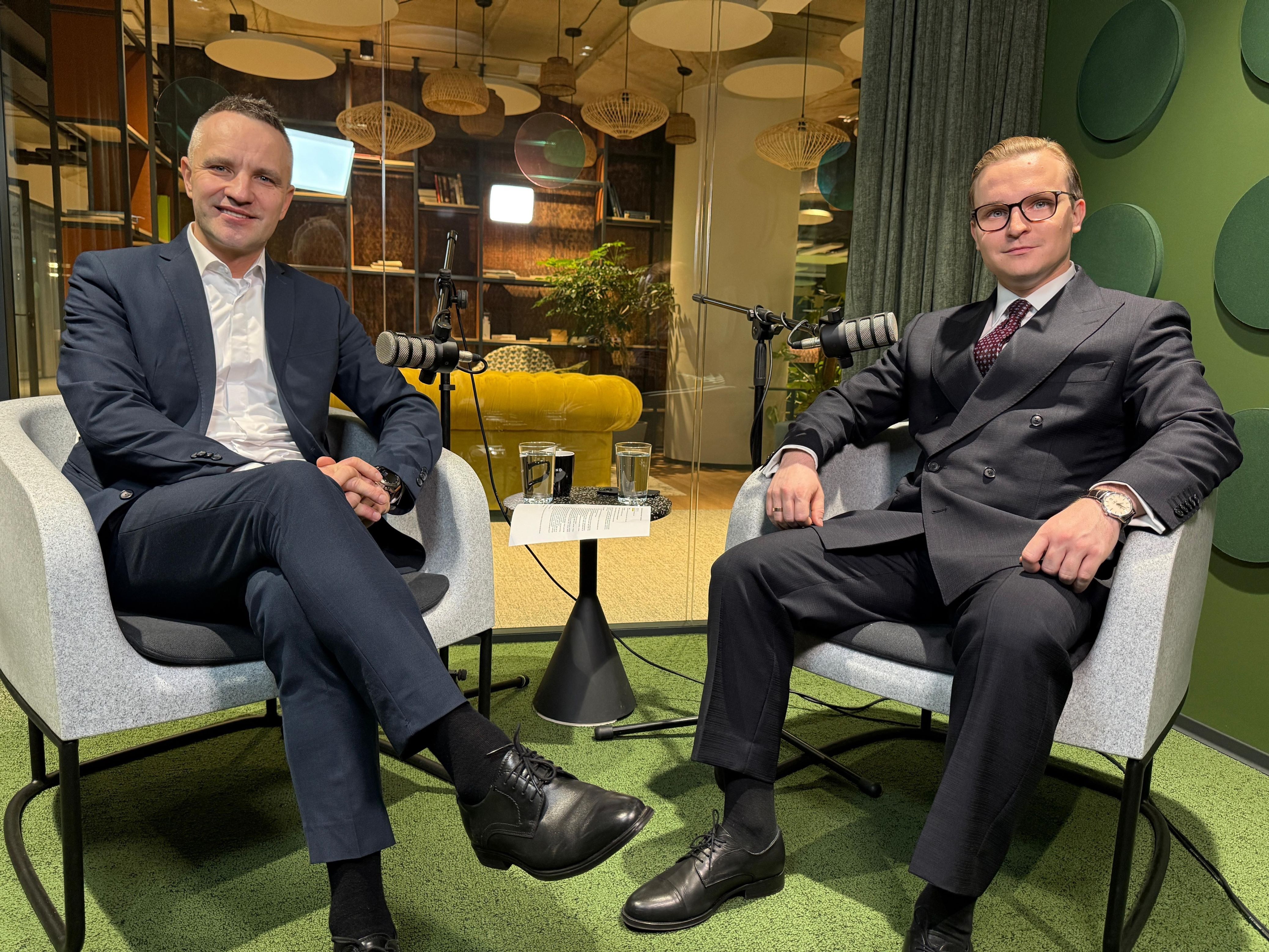
In the latest episode of the Finance Latvia Association's “Financial Dialogue - the essentials” series “Sanctions and their control in Latvia - what is the reality?” a conversation with Paulis Iļjenkovs, Deputy Head of the Financial Intelligence Unit (FIU). The episode discusses issues such as: How is Latvia coping with sanctions control and the risks of sanctions evasion?What is Latvia's role in the international sanctions system?Should Latvian businesses and financial institutions prepare for stricter conditions? During the conversation, Paulis Iļjenkovs gives an insight into: The FIU’s annual performance since becoming the competent authority in sanctions implementation;The assessment of the frozen funds and assets in Latvia;The increase in criminal proceedings and attempts to circumvent sanctions;The unified approach of EU Member States to sanctions compliance and US/UK sanctions implementation trends. The episode also explains the requirements for financial institutions and businesses to comply with sanctions and discusses the challenges ahead in the sanctions area in 2025. The recording of the Finance Latvia Association's conversation with Paulis Iļjenkovs is available in Latvian language.
17.03.2025 11:20
European Commission warns of a high risk of sanctions circumvention in plywood imports
The European Commission has issued a high-risk alert for the circumvention of sanctions on plywood, in particular birch plywood, imported from Russia and Belarus. Plywood is an important source of revenue for these countries and European Union (EU) sanctions prohibit the purchase, import or transfer, directly or indirectly, of plywood and other wood products originating in Russia or Belarus, or exported from there. Related services such as brokering and logistics support are also prohibited. The circumvention schemes include Russian and Belarusian producers using third-country companies to relabel and repackage their products in order to conceal their true origin. These companies may provide false documentation and use unreliable logistics routes, which increases the risk of sanctions violations. The European Commission notes that companies importing plywood should pay particular attention to the verification of origin. This applies to initial distributors, intermediaries, and end-users. Such verification is necessary to prevent sanctions violations and to ensure compliance with EU regulations. Important warnings: the plywood is made of birch;the producer/exporter is located in a country with trade links to Russia or Belarus, such as China, Kazakhstan or Turkey;processing operations that are not economically justified;the logistic routes appear illogical. Read more: https://ej.uz/ob72
27.02.2025 11:17
Exporters of high priority items must implement measures to prevent sanctions circumvention
As of 26 December 2024, persons who sell, supply, transfer or export goods included in the list of high priority items must take measures to identify the risks associated with the entry of these goods into Russia and implement appropriate policies, controls and procedures to mitigate these risks. Likewise, persons must ensure that these requirements are implemented by companies established outside the European Union that they own or control. The list of common high priority items includes goods and technologies that are important for the development or production of Russian military goods or that have been found in Russian weapons on the battlefield. The list of high priority items is available Annex XL and Annex XLVIII to Council Regulation No 833/2014 of 31 July 2014 concerning restrictive measures in view of Russia’s actions destabilising the situation in Ukraine1 (Regulation No 833/2014). For goods included in Annex XLVIII to Regulation No 833/2014, the obligation to introduce measures to prevent sanction circumvention comes into force on 26 May 20252. These requirements are specified in Article 12gb(1) of Regulation No 833/2014 and provide that natural persons and legal persons who sell, supply, transfer or export goods included in the list of high priority items must: take appropriate steps, proportionately to their nature and size, to identify and assess the risks of exportation to Russia and exportation for use in Russia for high priority items or technology, and ensure that those risk assessments are documented and kept up-to-date;implement appropriate policies, controls and procedures, proportionately to their nature and size, to mitigate and manage effectively the risks of exportation to Russia and exportation for use in Russia for high priority items or technology, whether those risks were identified at their level or at the level of the Member State or of the Union. The requirements do not apply to persons who sell, supply or transfer items only within the European Union or to partner countries listed in Annex VIII to Regulation No 833/2014. Similar requirements for exporters of high priority items are also specified in Council Regulation (EC) No 765/2006 of 18 May 2006 concerning restrictive measures in view of the situation in Belarus and the involvement of Belarus in the Russian aggression against Ukraine3. A more detailed explanation of the requirements for exporters of high priority items is available in the frequently asked questions document published by the European Commission, available here. Please note that the Financial Intelligence Unit (FIU) is currently developing guidelines for business operators for the implementation of an internal control system, which will, inter alia, explain the measures that exporters of high priority items must implement to identify, manage and mitigate the risks of sanctions circumvention to ensure compliance with the requirements imposed on them. The guidelines will be published on the FIU website. 1The consolidated version is available here: https://eur-lex.europa.eu/legal-content/EN/TXT/?uri=CELEX%3A02014R0833-20241217&qid=1740390623098 2Council Regulation (EU) 2025/395 of 24 February 2025 amending Regulation (EU) No 833/2014 concerning restrictive measures in view of Russia’s actions destabilising the situation in Ukraine; available here: https://eur-lex.europa.eu/legal-content/EN/TXT/HTML/?uri=OJ:L_202500395 3The consolidated version is available here: https://eur-lex.europa.eu/legal-content/EN/TXT/?uri=CELEX%3A02006R0765-20241216&qid=1740396235868
25.02.2025 11:14
16th Sanctions package adopted
Yesterday, on February 24, 2025, marked three years since Russia's full-scale invasion of Ukraine. To mark the date, the European Union (EU) has adopted its 16th package of sanctions against Russia, increasing the pressure on Russia for the war it is waging. The EU reaffirms its commitment to support Ukraine and to keep up the pressure on Russia until a just and lasting peace is achieved in Ukraine.1 Key elements of the 16th sanctions’ package Additions to the sanctions’ lists The targeted financial sanctions’ lists have been supplemented with an additional 83 listings - 48 natural persons and 35 entities, such as those supporting the Russian military complex, active in sanctions circumvention, crypto assets exchanges in Russia and the maritime sector. In addition, two new criteria have been introduced which will allow the EU to sanction persons and entities that own or operate shadow fleet vessels, as well as those that support or benefit from the Russian military-industrial complex. List of Russian “shadow fleet” vessels expanded A further 74 tankers and other vessels considered to be part of Russia's "shadow fleet" are banned from EU ports and services for violating oil price caps, transporting military equipment or grain stolen in Ukraine. Energy restrictions Prohibiting temporary storage of Russian crude oil and petroleum products on EU territory, regardless of the purchase price and destination of the oil, which was previously allowed if the products were sold under the oil price caps. Additional restrictions on the export of goods and technology, in particular software related to oil and gas exploration, to further limit Russia's exploration and production capabilities. In addition, the ban on the supply of goods, technology and services for the completion of crude oil projects in Russia, such as the “Vostok Oil” project, is expanded, similar to the current restrictions on the completion of liquefied natural gas projects. Ban on imports of aluminium In addition to the existing ban on imports of processed aluminium goods from Russia, the 16th sanctions package also imposes a ban on EU imports of primary aluminium from Russia. In order to ensure a smooth transition for companies, a quota mechanism for aluminium imports is introduced. Export and transit bans on dual-use goods and technology Export to and transit through Russia of a number of items used by Russia on the battlefield are banned. Examples include software related to Computer Numerical Control (CNC) machines used in weapons production, video-game controllers used by the Russian army to pilot drones on the battlefield, and certain chemical compounds. Restrictions on banks For the first time, the EU bans transactions with foreign banks that are using the Russian Financial Messaging System, or “SPFS”. “SPFS” is a specialised financial messaging service developed by the Central Bank of Russia to counter the impact of the restrictive measures. In addition, the list of Russian banks banned from providing the specialised financial messaging service (SWIFT) includes a further 13 Russian regional banks considered important for the Russian financial and banking systems. Transport restrictions Criteria have been extended to allow sanctions to be imposed also on third-country carriers operating domestic flights in Russia or supplying aviation goods to Russian airlines or for domestic flights in Russia. If these airlines are included on the list, they will not be allowed to fly to the EU. In addition, the EU has reinforced the existing ban on the carriage of cargo within the EU, including in transit, by road transport companies 25% or more owned by Russian natural or legal persons. The new rule prohibits any change in the capital structure of these companies that would increase the share of Russian ownership above 25%. Prohibitions on infrastructure The EU has banned all transactions with certain Russian ports, sea ports and airports. A new ban for EU operators to provide construction services in Russia. Restrictions in the occupied territories of Ukraine Prohibition on the provision of services in the occupied territories (Crimea, Donetsk, Kherson, Luhansk, Zaporizhia), including construction, consultancy, IT and legal services. The sanctions regime for these territories has been extended until 2026. Reinforcement of the Belarus sanctions regime The sanctions package includes additional restrictive measures against Belarus, in line with the trade sanctions imposed on Russia. In addition, restrictions are introduced on the sale or provision of services and software, deposits, crypto-asset wallets and transport. This package of sanctions is part of the EU's long-term strategy to weaken Russia's economic and military capabilities and to prevent sanctions circumvention through third countries. The EU continues to work closely with international partners to ensure the effective implementation of sanctions and to support Ukraine in its fight for sovereignty and territorial integrity. For more information see the publication in the Official Journal of the EU: https://eur-lex.europa.eu/oj/daily-view/L-series/default.html?&ojDate=24022025 1https://ec.europa.eu/commission/presscorner/detail/en/ip_25_585
18.02.2025 11:10
Businesses’ perceptions and challenges in complying with sanctions - results of a new survey
In order to ensure uniform and effective implementation of sanctions in Latvia, as well as to implement the most appropriate support measures for Latvian businesses - including training and informative activities - the Financial Intelligence Unit (FIU), as the national competent authority for the implementation of international and national sanctions, initiated a public opinion poll. A survey conducted at the end of last year on businesses’ awareness and the challenges of sanctions compliance revealed that 79% of businesses are aware of the restrictive measures. Analysing the results by different group of companies, it was found that larger companies - those with more than 20 employees and a turnover of more than €3 million - are more likely to understand the impact of sanctions and are more likely to implement the necessary compliance measures. Similarly, higher awareness and compliance practices are observed in companies registered in Riga. In the opinion of smaller companies (10 to 19 employees) with a turnover of up to €1 million the necessity to implement specific measures to comply with sanctions is less relevant. The survey results reveal a growing awareness about sanctions in businesses, but also point to the need for further education, especially among smaller companies, to ensure uniform and effective compliance with sanctions across the business environment. The survey covered 300 companies from different economic sectors operating in Latvia and employing 10 or more people. Key findings: Impact of sanctions - 45% of companies have experienced the impact of sanctions, especially those with a turnover above €10 million and those already implementing sanctions compliance measures.Need for support - 42% of businesses consider the support of public authorities for sanctions compliance to be sufficient, but more than half would like to receive additional support.Main challenges - 47% of businesses affected by sanctions experience bureaucratic burdens, 38% face difficulties in verifying partners and 36% are unable to keep up with changes.Main challenges - 47% of businesses affected by sanctions experience bureaucratic burdens, 38% face difficulties in verifying partners and 36% are unable to keep up with changes.Availability of information - 66% of companies want to be informed immediately about changes to sanctions, preferring free emails.Need for training - 69% of companies want to learn how to research customers and counterparties, while 62% consider training in identifying suspicious transactions essential. Businesses support sanctions, but are not fully convinced of their effectiveness The survey shows that 88% of companies fully support sanctions against Russia and Belarus. However, when it comes to the effectiveness of the sanctions, companies gave an average score of 5.57 out of 10. The results of the survey clearly demonstrate the need for active cooperation with businesses in the implementation of sanctions and confirm that it was essential to designate a single competent authority for sanctions implementation in Latvia. This centralised approach allows for more effective coordination of support to businesses, ensuring clarity and a common approach to sanctions compliance. Given that the private sector plays a key role in sanctions compliance, the FIU's main priority in 2025 as the competent authority is to provide clear guidance, precise explanations and training opportunities for business. For more information in Latvian language regarding the survey, see here.
06.02.2025 11:08
The FIU has published a document on assessment of control by designated public officials
Given that the restrictions imposed by targeted financial sanctions should be applied not only directly to persons on the sanctions list, but also to other persons owned or controlled by the sanctioned person, the Financial Intelligence Unit of Latvia (FIU) has published a document on assessment of control by designated public officials. In practice, the assessment of the element of control is one of the most difficult aspects of the implementation of targeted financial sanctions. Additional ambiguity may arise in situations where potential control is exercised by designated public officials, particularly within state regimes such as Russia and Belarus. Latvia's geographic location and historical economic ties may bring persons in Latvia into contact with Russian and Belarusian public authorities and state–owned companies. Therefore, it is essential to clarify the aspects of assessing the element of control to ensure legal certainty and a common approach to the implementation of sanctions. In assessment of the justification of asset freezes in Latvia, FIU concluded that a number of asset freezes were not carried out in accordance with the sanctions laws and regulations. Most of these cases involved the assessment of the element of control in relation to Belarusian state-owned companies or public authorities where the alleged control is exercised by a high-level Belarusian public official subject to targeted financial sanctions. The purpose of this document is to inform on the approach of the FIU to date in assessing control in situations where a non-sanctioned person is allegedly controlled by a public official subject to targeted financial sanctions. The FIU explains the aspects of the assessment of the element of control and the cases where, in the view of the FIU, an asset freeze is unjustified and a public official exercises control over a public authority and state-owned companies within the meaning of the sanctions. The FIU constantly follows the clarifications and practices on sanctions implementation issued by the European Union (EU) authorities. However, at the current EU level, there are no guidelines or further clarifications on the assessment of the element of control in situations where there is the alleged control of a state-owned company or public authority. If the EU authorities were to publish a clarification on the assessment of the element of control in relation to public officials, the FIU, in the light of current circumstances and the need, would consider revising the position taken in this document. At the same time, it must be noted that the FIU is not empowered to formally interpret legal provisions. The document published by the FIU in Latvian language can be viewed here.
31.01.2025 11:03
Legal services and sanctions: the FIU clarification
The Financial Intelligence Unit (FIU) has observed that legal service providers have a different understanding of the sanctions restrictions that apply to the provision of legal services. Sanctions include both restrictions on the provision of legal services to sanctioned persons1 and restrictions on the provision of legal services to companies and the government of the Russian Federation and the Republic of Belarus. With a view to unifying understanding, the FIU provides clarification on the implementation of the sanctions’ regime on the provision of legal services. Provision of legal services to a sanctioned person The FIU draws attention to the fact that, in general, legal services should be considered as economic resources within the meaning of European Union sanctions regulations if they can be used directly or indirectly to obtain funds, goods or services. Therefore, in general the provision of legal services to a sanctioned person is prohibited. At the same time, the application of sanctions shall consider the fundamental rights of individuals, including the right to an effective remedy and to a fair trial2. In the light of the above, the FIU notes that the provision of legal services to a sanctioned person without the authorisation of the competent authority is only permissible if the services are related to the protection of rights and legitimate interests before the institutions and the courts. In the view of the FIU, such services do not constitute an “economic resource” within the meaning of the sanctions’ regulations. In all other cases, other than those involving the protection of rights and legal interests before the institutions or the courts, it is required to acquire the FIU’s authorisation before the provision of legal services. For example, if a legal service provider intends to provide legal services in non-contentious matters, including commercial transactions, it is necessary to apply to the FIU for an authorisation. The application for an authorisation must include a description of the service, the fees for the service, information on how the fees will be paid, and the the respective exception from the sanctions’ regulations that allows the authorisation. For more information see here. In all other cases, other than those involving the protection of rights and legal interests before the institutions or the courts, it is required to acquire the FIU’s authorisation before the provision of legal services. For example, if a legal service provider intends to provide legal services in non-contentious matters, including commercial transactions, it is necessary to apply to the FIU for an authorisation. The application for an authorisation must include a description of the service, the fees for the service, information on how the fees will be paid, and the the respective exception from the sanctions’ regulations that allows the authorisation. For more information see here. It should be stressed that even for the provision of services which are not restricted by sanctions, payment from funds of the sanctioned person is only permissible with the authorisation of the competent authority. Furthermore, pursuant to Article 4(1)(b) of Council Regulation No 269/2014 and Article 1v(1)(b) of Council Regulation No 765/2006, the release of funds may be subject to conditions deemed appropriate by the competent authority, provided that the funds are intended exclusively for payment of reasonable professional fees or reimbursement of legal expenses. Similarly, service providers must ensure that the payment does not breach the obligation to freeze the funds. Sectoral sanctions on the provision of legal services When assessing whether the provision of a service to a client is in compliance with European Union sanctions, it is important to consider that compliance must be ensured with both financial and sectoral sanctions. Sectoral sanctions have been imposed against the Government of the Russian Federation and companies incorporated in the Russian Federation, as well as against the Government of the Republic of Belarus and related entities. Pursuant to Article 5n(2) of Council Regulation No 833/2014, the provision of legal advisory services directly or indirectly to the Government of the Russian Federation or to legal persons, entities or bodies established in the Russian Federation is prohibited. The same restrictions are also set out in Article 1jc of Council Regulation No 765/2006 in respect of the Republic of Belarus, its Government, its public bodies, corporations or agencies or any natural or legal person, entity or body acting on behalf of or at the direction of the Republic of Belarus, its Government, its public bodies, corporations or agencies. Both regulations provide that the prohibition does not apply to the supply of services which are strictly necessary for the exercise of the rights of defence in judicial proceedings and of the right to an effective legal remedy, nor to the supply of services which are strictly necessary to ensure access to judicial, administrative or arbitral proceedings in a Member State or for the recognition or enforcement of a judgment or an arbitration award rendered in a Member State, provided that such provision of services is consistent with the objectives of the Regulation. The European Commission Guidelines3 indicate that the prohibition on the direct or indirect supply of legal services does not apply to companies established in other countries outside of the Russian Federation, even if they are subsidiaries of companies of the Russian Federation or owned by nationals of the Russian Federation. The use of the term "indirectly" means that it is prohibited for an EU services provider to provide restricted services to EU or other non-Russian entities that are subsidiaries of entities established in Russia if those services would actually be for the benefit of the parent company established in Russia. In addition, the FIU invites to consult the judgment of the Court of Justice of the European Union in Case C-109/234 and the judgment of the General Court of the European Union in Case T-797/225, which assess the compatibility of sectoral restrictions on the provision of legal services with fundamental rights of the European Union. In its judgment in Case T-797/22, the Court clarified that the restrictions do not prevent a lawyer to carry out a prior assessment of the legal situation in order to understand whether the provision of the service is in conformity with the European Union's sanctions regime6. The FIU stresses that the provision of legal services which are not in conformity with the European Union sanctions’ regulations may constitute a breach of sanctions punishable under the Article 84 of the Criminal Law. 1 In accordance with Article 1(4) of the Law on International Sanctions and National Sanctions of the Republic of Latvia: https://likumi.lv/ta/en/en/id/280278 2 In accordance with Article 47 of the Charter of Fundamental Rights of the European Union: https://eur-lex.europa.eu/legal-content/EN/TXT/?uri=CELEX:12016P/TXT 3 European Commission Guidelines, response to Section G, Chapter 8, Question 4, p. 349, available at: https://finance.ec.europa.eu/document/download/66e8fd7d-8057-4b9b-96c2-5e54bf573cd1_en?filename=faqs-sanctions-russia-consolidated_en.pdf 4 Available at: https://curia.europa.eu/juris/document/document.jsf?text=&docid=289811&pageIndex=0&doclang=EN&mode=lst&dir=&occ=first&part=1&cid=19752367 5 Available at: https://eur-lex.europa.eu/legal-content/EN/TXT/HTML/?uri=CELEX:62022TJ0797&qid=1733299244501 6 See paragraphs 62 and 63 of the judgment in Case T-797/22.