breadcrumb arrow breadcrumb arrow
News

News

06.07.2026 12:00
FIU Latvia publishes updated guidelines on the assessment of control of designated public officials
The Financial Intelligence Unit of Latvia (FIU Latvia) has updated its guidelines, "Assessment of control of designated public officials." The guidelines explain how to assess the control criterion in situations where control over a legal person, public authority, or state-owned enterprise that is not itself subject to sanctions may be exercised by a public official designated under financial sanctions. Targeted financial sanctions apply not only to persons directly designated in sanctions lists, but also to legal persons, entities or bodies that are owned or controlled by designated persons. Consequently, assessing the control criterion is one of the most complex aspects of implementing targeted financial sanctions in practice, and a consistent approach to such assessments is essential for ensuring the effective implementation of sanctions and legal certainty. Due to Latvia's geographical location and historical economic ties, persons in Latvia may encounter public authorities and state-owned enterprises of Russia and Belarus. Therefore, the purpose of the guidelines is to promote consistent sanctions implementation practices and legal certainty by explaining the FIU's approach to assessing control in situations where a designated public official may exercise it. The second updated version has been prepared to align the guidelines with amendments to Council Regulation (EU) No 269/2014, introducing definitions of "owning a legal person, entity or body" and "controlling a legal person, entity or body" in Article 1 of the Regulation. Although the institutions of the European Union had previously clarified the criteria to be considered when assessing ownership and control for sanctions purposes, these amendments harmonise and expressly incorporate those legal concepts into Regulation (EU) No 269/2014. Consequently, the FIU's approach to assessing control has not changed in substance. "Assessment of control of designated public officials." Since April 2024, FIU Latvia has been the national competent authority for sanctions implementation in Latvia, working with Latvian and international partners to strengthen the effectiveness of sanctions.
15.06.2026 11:29
EU updates sanctions lists
On 15 June 2026, the Council of the European Union (EU) adopted a decision to expand sanctions lists related to Russia by imposing restrictive measures on additional persons. The changes include additions to the lists of natural and legal persons subject to targeted financial sanctions in connection with Russia’s illegal war in Ukraine, Russia’s hybrid threat activities, and human rights violations. Persons included in the sanctions lists are subject to asset freezes, and EU citizens and companies are prohibited from making funds or economic resources available to them. Individuals are also subjected to travel restrictions, preventing them from entering or transiting through the territory of the EU. Notably, these additions to the sanctions list were adopted outside the EU’s broader sanctions package, signaling a more flexible and responsive approach to sanctions adoption. Learn more about the updated sanctions lists: https://eur-lex.europa.eu/legal-content/LV/TXT/?uri=OJ:L_202601361https://eur-lex.europa.eu/legal-content/LV/TXT/?uri=OJ:L_202601356https://eur-lex.europa.eu/legal-content/LV/TXT/?uri=OJ:L_202601362 Since April 2024, FIU Latvia has been the national competent authority for sanctions implementation in Latvia, working with Latvian and international partners to strengthen the effectiveness of sanctions.
22.05.2026 11:49
Key Sanctions Developments in Q1 2026
SUMMARY EU is strengthening sanctions against Russia, including banning the import of petroleum products produced from Russian crude oil and approving a gradual phase-out of Russian natural gas.Krievijas dabasgāzes.EU is expanding sanctions lists in response to human rights violations and Russia’s destabilising activities.The Court of Justice of the European Union confirms broader application of sanctions to companies and prohibits sanctioned persons from participating in shareholders’ meetings.In Latvia, 24 new criminal proceedings have been initiated for violations of international sanctions.Latvian courts completed adjudication in 11 sanctions-related cases, with several resulting in fines and imprisonment.The Customs Board of the State Revenue Service initiated 29 administrative offence proceedings.Guidance on the application of sanctions has been updated. Strengthening of SanctionsOn 21 January, a ban entered into force in the European Union (EU) on the import of petroleum products manufactured from Russian crude oil.¹ Although the EU had already prohibited imports of Russian crude oil (except via pipelines), it had until now remained permissible to import petroleum products manufactured in third countries using Russian crude oil.On 26 January, a regulation was adopted approving the EU’s gradual phase-out of Russian natural gas.² The import ban entered into force on 18 March, while transitional periods for the fulfilment of existing contracts will remain in place until the end of 2027. Specific exemptions are also предусмотрены for landlocked countries.Although the 20th sanctions package was adopted on 23 April, during the first months of the year the EU expanded sanctions regimes targeting Russia’s “hybrid warfare”³ activities and human rights violations. On 23 February, the EU imposed sanctions on eight Russian individuals for serious human rights abuses and acts of repression. In addition, the sanctions list related to Russia’s destabilising activities was expanded by 10 individuals, primarily authors and distributors of Russian propaganda.Key Judgments of the Court of Justice of the European UnionOn 26 March, the Court of Justice of the European Union dismissed appeals submitted by five sanctioned individuals — Dmitry Alexandrovich Pumpyanskiy, Tigran Khudaverdyan, Viktor Filippovich Rashnikov, Dmitry Arkadievich Mazepin, and German Khan — who sought the annulment of sanctions imposed against them.⁵ The joined cases are particularly significant because the Court interpreted the criterion of an “influential businessperson” for inclusion on sanctions lists. The Court confirmed that a person may justifiably be sanctioned even without direct links to the Russian government if the individual is economically influential or operates in a sector constituting a substantial source of revenue for the Russian government.Additional important sanctions-related judgments were delivered on 12 March. The Court confirmed⁶ that the assets of a company owned or controlled by a sanctioned person may also be frozen even if the company itself is not listed under sanctions, provided that at least 50% of its shares are owned by a sanctioned individual.In another judgment,⁷ the Court ruled that persons included on sanctions lists are not permitted to participate in shareholders’ meetings or exercise voting rights therein.FIU TopicalitiesDuring the first quarter, the Financial Intelligence Unit of Latvia received 310 suspicious transaction reports indicating possible sanctions violations or attempted violations. Most reports concerned the possible shipment of prohibited goods to Russia through third countries, the provision of services to Russian companies, accounts held in sanctioned banks, and the transportation of cash to Russia. A total of 51 analytical reports relating to possible sanctions violations were forwarded to law enforcement and other authorities.On 20 February, the FIU adopted a new General Authorisation, expanding the categories of payments for which sanctioned persons no longer require separate FIU permission.The FIU also repeatedly updated the “Frequently Asked Questions” section of its website regarding sanctions implementation, clarifying existing guidance and adding new questions. New explanations were provided, for example, regarding the provision of services to Russian and Belarusian companies, the obligation to comply with EU sanctions in third countries, the holding of shares in Russia or Belarus, framework agreements, the transit of goods through the EU, and the FIU General Authorisation.By the end of the first quarter of 2026, the following assets owned or controlled by sanctioned persons had been frozen in Latvian financial institutions and state registers: funds — EUR 152.2 millionreal estate properties — 103vehicles — 66agricultural machinery — 11vessel — 1livestock herd — 1trademarks — 12 A list of sanctioned persons with frozen assets in Latvia is available here.Criminal Proceedings Statistics in LatviaDuring the first quarter of 2026:24 new criminal proceedings were initiated for violations of international sanctions;criminal prosecution was commenced in six criminal proceedings;charges were brought against seven natural persons;five criminal proceedings were referred to court;two criminal proceedings were completed through prosecutorial penalty orders.In one of the proceedings concluded through a prosecutorial penalty order, a natural person was fined EUR 9,360, while a legal entity was ordered to pay more than EUR 17,100. The case concerned an attempt to export sanctioned goods — primer products valued at EUR 67,800 — to Russia using falsified documents and falsely declaring Kazakhstan as the final destination. The goods had already been confiscated, sold, and the proceeds transferred to the state budget.In another criminal proceeding concluded through a prosecutorial penalty order, a Russian citizen holding a permanent residence permit in Latvia was placed under probation supervision for three years. In this case, the individual knowingly violated EU sanctions against the Russian Federation for financial gain by remotely working as a programmer (1C developer) for a Russia-registered company and thereby systematically providing prohibited IT consultancy services. Between 2022 and 2025, the individual received remuneration amounting to 5.89 million Russian roubles (approximately EUR 64,200). Part of this remuneration — nearly EUR 10,000 — was received through an account held with a sanctioned bank, thereby directly making funds available to a sanctioned legal entity.In Latvian CourtsDuring the first months of the year, Latvian courts completed adjudication in 11 criminal cases related to sanctions violations.In one case, a judgment entered into force imposing fines exceeding EUR 26,500 on two individuals. In two other cases, criminal proceedings were terminated after the court concluded that no criminal offence had occurred.A further six individuals were convicted in cases where judgments had not yet entered into force by the end of the quarter. In two cases, imprisonment sentences of 11 years⁸ and three years respectively were imposed. The largest fine imposed on a natural person amounted to EUR 31,200, while the largest monetary recovery ordered against a legal entity amounted to EUR 39,000.Customs Board TopicalitiesThe Customs Administration of the State Revenue Service of Latvia initiated 29 administrative offence proceedings related to sanctions violations.Overall, during the reporting period, 187 consignments were denied border crossing due to sanctions violations or suspicions of sanctions circumvention. Most rejected consignments concerned exports. The most frequently blocked exports included spare parts for various devices and machinery, electrical equipment and components, and vehicle spare parts. Imports from Russia and Belarus involving construction structures, timber, iron compounds, and furniture were also denied.In an additional 43 cases, attempts were identified to export cash denominated in official EU Member State currencies from the EU in violation of sanctions regulations. Postal controls prevented 31 violations, while 42 cases involved individuals attempting to transport sanctioned goods across the border.Example of a Sanctions ViolationOn 23 January 2026, at the Pāternieki Customs Control Point, customs officials identified an attempt to transport engines to Belarus. Although the declared recipient was located in Kazakhstan, the engines in question were also prohibited from transit through Russia and Belarus. The total value of the goods amounted to EUR 102,000. Criminal proceedings were initiated in connection with the case. Photos by Customs Board About the Quarterly PublicationThe Financial Intelligence Unit of Latvia publishes quarterly summaries of key sanctions-related developments and statistics in order to provide the public with regular and transparent information regarding sanctions updates and their enforcement in Latvia. The publication is based on information available to the FIU, as well as data provided by the Prosecutor General’s Office, the Court Administration, and the Customs Administration of the State Revenue Service. 1The prohibition is set out in Article 3m of Council of the European Union Council Regulation (EU) No 833/2014: https://eur-lex.europa.eu/legal-content/EN/AUTO/?uri=celex:32025R1494.  2https://eur-lex.europa.eu/legal-content/EN/TXT/?uri=OJ:L_202600261. 3https://eur-lex.europa.eu/legal-content/EN/TXT/?uri=CELEX%3A02024R2642-20260316. 4https://eur-lex.europa.eu/legal-content/EN/TXT/?uri=CELEX%3A02024R1485-20260223. 5Judgment in joined cases C-696/23 P, C-704/23 P, C-711/23 P, C-35/24 P and C-111/24 P: https://eur-lex.europa.eu/legal-content/LV/TXT/HTML/?uri=CELEX:62023CJ0696. 6 Judgment in case C-84/24: https://eur-lex.europa.eu/legal-content/LV/TXT/HTML/?uri=CELEX:62024CJ0084. 7 Judgment in case C‑465/24: https://eur-lex.europa.eu/legal-content/LV/TXT/HTML/?uri=CELEX:62024CJ0465. 8 In the case, violation of sanctions was one of the criminal offences with which the person had been charged. The term of imprisonment was reduced to 9 years, 8 months and 29 days, applying Section 52 of the Criminal Law.

22.05.2026 11:24
The Financial Intelligence Unit of Latvia Highlights the Importance of Cooperation in Sanctions Implementation at an International Forum
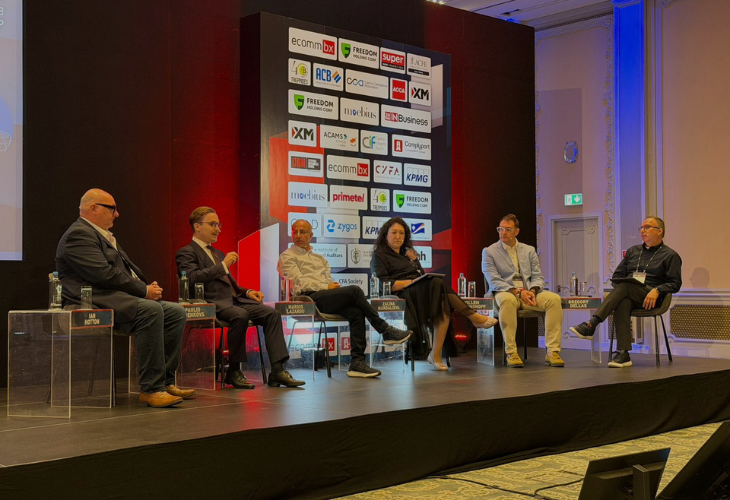
On Wednesday, 20th of May 2026, Financial Intelligence Unit of Latvia Deputy Head for Sanctions Paulis Iļjenkovs participated in the 12th International Compliance Forum in Cyprus, speaking in two expert panel discussions. In one of the discussions on sanctions-related issues, experts addressed the growing complexity of sanctions implementation, including the risks of sanctions circumvention, the importance of international cooperation, and the crucial role of timely information exchange between the public and private sectors. During the discussion, it was emphasized that identifying cases of sanctions circumvention does not indicate a lack of sanctions effectiveness; rather, it demonstrates active sanctions implementation, monitoring, and coordinated action by competent authorities and international partners. Since April 2024, the Financial Intelligence Unit of Latvia has been the national competent authority for sanctions enforcement matters in Latvia. The Service ensures the implementation of sanctions in Latvia and cooperates with Latvian and international partners to promote the effectiveness of sanctions. Sanctions lists, explanatory materials, and other useful information are available on the FIU’s website.
18.05.2026 11:32
EU sanctions additional 16 individuals and seven entities over deportation of Ukrainian children
On 11 May 2026, the Council of the European Union (EU) adopted sanctions against additional 16 individuals and seven entities involved in the unlawful deportation and forced transfer of Ukrainian children to Russia.According to the EU, the sanctions target persons and institutions involved in the systematic, unlawful deportation, forced transfer of Ukrainian children, the so-called militarised “re-education”, and unlawful adoption practices. Those listed include Russian officials and politicians, children’s centres, youth organisations, and other structures facilitating the integration of Ukrainian children into the Russian system. According to information provided by the EU, since the beginning of Russia’s full-scale invasion of Ukraine, Russia has deported and forcibly transferred nearly 20,500 Ukrainian children. These actions constitute serious violations of international law and children’s fundamental rights, aimed at erasing Ukrainian identity and threatening the preservation of future generations. Those listed today are subject to an asset freeze, and EU citizens and companies are forbidden from making funds and economic resources available to them. Natural persons are additionally subject to a travel ban that prohibits them from entering or transiting through EU territories.Notably, these additions to the sanctions list were adopted outside the EU’s broader sanctions package, signalling a more flexible and responsive approach to sanctions adoption. Learn more about the updated sanctions list.
07.05.2026 11:21
FIU Participates in European Commission High-Level Discussions on Strengthening Sanctions and Preventing Circumvention Risks
On 29th of April, representatives of the Financial Intelligence Unit of Latvia participated in the ninth high-level meeting organised by the European Commission on the implementation of European Union (EU) restrictive measures. During the meeting, representatives of EU Member States, the European Commission, the European External Action Service and partner countries discussed the effectiveness of sanctions regimes, current trends in sanctions violations, as well as opportunities to strengthen a unified approach to sanctions implementation and prevent sanctions breaches. The meeting was chaired by Commissioner for Financial Services and the Savings and Investments Union Maria Luís Albuquerque. “Such formats of international cooperation are important for building a common understanding of sanctions risks, promoting information exchange, and strengthening practical cooperation among EU Member States and international partners. Effective sanctions implementation is an essential prerequisite for ensuring European security and the rule of law,” emphasised Marta Tilhena. Particular attention was devoted to the recently adopted 20th sanctions package, including the first-ever application of the EU anti-circumvention instrument. In response to increasing trade flows of high-priority goods to certain third countries and potential sanctions circumvention risks, the EU introduced a prohibition on the export of specific goods to the Kyrgyz Republic. The measures aim to reduce the risk that such goods could be re-exported to Russia and used for the needs of its military-industrial complex. The meeting also addressed issues related to restrictions on Russian energy exports, the activities of the so-called “shadow fleet,” the use of alternative payment networks in third countries, and the impact of sanctions on Russia’s ability to finance warfare. Participants discussed the latest trends and typologies of sanctions violations, as well as effective solutions for preventing and investigating sanctions breaches. At the same time, the importance of the EU’s international dialogue with third countries was highlighted. Discussions included examples where financial institutions and supervisory authorities in third countries introduced significant improvements in sanctions risk management following the imposition of EU sanctions. In certain cases, after assessing the effectiveness and sustainability of these improvements, financial institutions were subsequently removed from EU sanctions lists. Member States also shared practical experience in sanctions enforcement and investigations of sanctions violations, including the detention and seizure of “shadow fleet” vessels, as well as criminal proceedings in cases where sanctioned goods had been attempted to be delivered to Russia through third countries. Following the high-level meeting, the Sanctions Coordinators Forum took place under the leadership of EU Sanctions Envoy David O’Sullivan. Representatives from Ukraine, the United Kingdom, the United States and other partner countries also participated in the forum, discussing the impact of sanctions and strengthening future international cooperation. During the meetings, the importance of intelligence-sharing and interinstitutional cooperation in effective sanctions implementation was also emphasised, alongside the need to continue close cooperation with third countries and the private sector in sanctions risk management. Since April 2024, the Financial Intelligence Unit of Latvia has been the national competent authority for sanctions implementation.
23.04.2026 14:23
The EU intensifies pressure on Russia – the 20th sanctions package has been adopted
Main elements of the 20th sanctions package Sectoral sanctions The list of goods subject to expanded export and transit restrictions has been broadened The new sanctions package includes additional goods whose export to Russia or transit through Russia is prohibited, as they can be used to support the enhancement of Russia’s military and technological capabilities. The export ban will apply to goods such as natural and synthetic rubber, iron or steel screws, and other cast iron or steel articles, etc. First-time application of an export ban on goods to third countries Observing a rapid increase in trade flows of high-priority goods in certain neighbouring countries of Russia, which may indicate sanctions circumvention through the use of import or export bans, a regulatory framework was introduced prohibiting the export of goods to third countries. With the adoption of the 20th sanctions package, for the first time within this framework, specific goods have been designated that are prohibited for export to a particular third country. Going forward, it is prohibited to export to the Kyrgyz Republic goods under CN code 8457 10 (multi-purpose machine tools for working metal) and CN code 8517 62 (machines for the reception, conversion and transmission or regeneration of voice, images or other data, including switching and routing apparatus), taking into account the potential risk of re-export to Russia. Within this restriction, additional goods and third countries may be added in the future, where the export of such goods would also be prohibited. New import bans The list of goods prohibited for import from Russia has been expanded, as these goods generate significant revenue for Russia, thereby enabling it to carry out activities that destabilize the situation in Ukraine. Under the new sanctions package, the import ban will apply to goods such as salt, pebbles, gravel, crushed stone, iron ore concentrates, anhydrous ammonia, as well as various copper and aluminium products, etc. The EU identifies persons supporting Russia’s defence and security sector 60 legal entities have been added to the sanctions list for activities that contribute to strengthening Russia’s military and technological capabilities, thereby directly supporting the development of its defence and security sector. The listed entities include both Russian and third-country persons. New prohibition on the provision of services to the Russian government It is now prohibited to provide services to the Government of Russia and to persons established in Russia that could contribute to its technological development. In particular, the provision of managed security services is prohibited. Managed security services include activities related to cybersecurity risk management or support, such as incident response, penetration testing, security audits and consulting, including expert advice related to technical support. Restriction on the re-publication of Russian propaganda media content In the EU, not only the broadcasting of content produced by media outlets supporting Kremlin narratives listed under Council Regulation (EU) No 833/2014 will be prohibited, but also its real-time re-publication (mirroring), in order to prevent circumvention of the restrictions. Restrictions on transactions involving ports used to circumvent oil price cap measures The list of ports and locks with which any transactions are prohibited has been expanded, adding two ports located in Russia and one in a third country. Energy sector Shadow fleet Under the new sanctions package, vessels may be classified as part of the “shadow fleet” not only if they transport crude oil and petroleum products of Russian origin, but also if they carry mineral products, such as natural raw materials required for industrial use, including salt, potassium carbonate, and others. An additional 46 shadow fleet vessels have been identified under the 20th sanctions package and included in the sanctions list. Liquefied natural gas (LNG) related service bans As of 1 January 2027, a ban will enter into force on the provision of liquefied natural gas (LNG) terminal services to Russian companies or entities owned or controlled by Russian persons. The ban includes services such as loading, unloading, storage, bunkering, and others. A new prohibition is also introduced on providing technical assistance, brokerage, or financial services to LNG tankers and icebreakers operating in Russian waters, flying the Russian flag, or owned or operated by Russian persons. Icebreakers may be actively used to strengthen the shadow fleet in Russia’s northern region. Measures to reduce the potential sale of tankers to Russian persons Tankers intended for the transport of crude oil and petroleum products are prohibited from being sold or transferred to Russian persons or for use in Russia. To reduce the risk that a third-country buyer of a tanker from an EU entity subsequently resells or transfers it to a Russian person, the vessel owner must, prior to sale, identify potential risks and establish an internal compliance system to mitigate the risk of the vessel ending up in Russia. The purchase agreement must include a clause prohibiting the resale of the tanker to a person in Russia or for use in Russia. Targeted financial sanctions The Annex I to Council Regulation (EU) No 269/2014 has been amended to include: 37 natural persons 80 legal entities Inclusion in Annex I to Council Regulation (EU) No 269/2014 entails an obligation to freeze all funds and economic resources belonging to, owned, held, or controlled by these persons, entities, or bodies. In addition, it is prohibited to directly or indirectly make funds or economic resources available to or for the benefit of these persons, entities, or bodies. Financial sector Four third-country banks have been identified that use the Russian Central Bank’s SPFS system or otherwise significantly hinder the achievement of the EU sanctions objectives Persons residing in the EU are prohibited from engaging in cooperation or carrying out any transactions with banks that use the Russian Central Bank’s SPFS system, provide crypto-asset services supporting Russia’s military aggression, or significantly impede the objectives set out in the sanctions framework. Under the new sanctions package, four additional such third-country financial institutions have been added. The list of financial institutions subject to transaction bans has also been expanded by adding 20 financial institutions. Additional restrictions targeting crypto-assets In addition to the previously established restrictions on the crypto-asset A7A5, the new sanctions package introduces a prohibition on transactions related to two additional crypto-assets still in the implementation phase - RUBx and Digital Rouble, the digital currencies of the Russian Central Bank. A prohibition is also introduced on any transactions with legal persons established in Russia that provide crypto-asset or exchange services. Furthermore, it is prohibited to engage in transactions with legal persons established outside the EU that are not financial institutions but provide crypto-asset or payment services enabling international transactions that could be used to circumvent restrictive measures. Ban on receiving donations from the Russian research sector It is prohibited to receive donations or other forms of financial support from Russian public or private research organisations, higher education institutions, as well as companies engaged in research or innovation development. Impact of sanctions on Belarus With the 20th sanctions package, new restrictive measures have been adopted against Belarus for supporting Russia’s aggression against Ukraine. The introduced measures are similar to those imposed on Russia. The list of prohibited services has been expanded to include a ban on the provision of tourism services and a ban on the provision of managed security services. Stricter restrictions have also been introduced in relation to crypto-assets, and new categories of goods subject to import and export bans have been defined. The export ban will now apply to goods such as various rubber products, metal wires, and certain types of agricultural machinery, while the import ban will apply to salt, anhydrous ammonia, iron ore, and other materials that can generate significant revenue for Belarus. The targeted financial sanctions lists have also been expanded, adding three legal entities. In addition, the requirement to obtain prior authorisation from the competent authority before providing services to parts of the governments of Russia and Belarus will no longer apply to Russian and Belarusian diplomatic and consular representations.
22.04.2026 14:12
Cooperation as the foundation of a secure financial system: FIU Latvia releases its 2025 Annual Report
The Financial Intelligence Unit of Latvia (FIU Latvia) has published its 2025 Annual Report, highlighting key achievements in financial intelligence, sanctions implementation, and international cooperation. “In 2025, the FIU continued its engagement across several key areas. In line with our mission – to safeguard the security of our country and its financial system, we continued to develop financial intelligence, ensure the effective implementation of sanctions, and enhance cooperation with national and international partners. At the same time, we continued our work as part of the 6th round MONEYVAL evaluation that had already started in 2024. Collaboration – and most importantly the quality of that collaboration – was the defining factor behind the results we achieved across all areas of our work in 2025,” emphasizes the Head of the FIU Latvia Toms Platacis. Positive international assessment strengthens Latvia’s reputation Last year, Latvia’s 6th-round evaluation report was adopted at the FATF/MONEYVAL plenary meeting. The report highlights that Latvia achieved high or substantial levels of effectiveness in all Immediate Outcomes (IOs), except one. The work carried out under the leadership of the FIU Latvia demonstrated the effectiveness of Latvia’s anti-money laundering and counter-terrorist and counter-proliferation financing (AML/CFT/CPF) system and its compliance with international standards, significantly strengthening the country’s international reputation. As a result of these efforts, on 19 February 2026, MONEYVAL published its report on the results of Latvia’s mutual evaluation. Read more: https://www.fid.gov.lv/en/news/latvias-amlcft-system-internationally-recognised-as-overall-effective Strengthened financial intelligence and analytical capacity In 2025, the FIU continued to strengthen its financial intelligence capabilities, focusing on the effective identification and prevention of financial crime. The FIU prepared and disseminated 612 analytical materials to law enforcement authorities (LEAs), supervisory and control authorities, and other institutions, and also produced 10 strategic and 12 tactical analytical studies. Read more: https://fid.gov.lv/en/roles-and-responsibilities/strategic-analysis-and-guidelines FIU received more than 5,500 suspicious transaction reports and nearly 100,000 threshold declarations. Given the structure of criminal offences reflected in suspicious transaction reports and requests from LEAs, the FIU Latvia’s financial intelligence activities in 2025 – and the analytical reports subsequently provided to competent authorities – were primarily related to fraud and cybercrime, sanctions violations, tax evasion, and subsequent and stand-alone money laundering. Our innovative OpCEN cooperation platform and the latest “Black-Box” solution also significantly assisted in achieving the high standard operational results. OpCEN is an FIU’s initiative established to ensure close operational cooperation between the FIU and LEAs in the investigation of complex financial crime, continued to play a significant role in strengthening the effectiveness of financial intelligence. In 2025 OpCEN was joined for the first time also by our close cooperation partners from the private sector – financial institutions. In 2024, the FIU data finder “Black-Box” was created – a technical solution that provides LEAs with a possibility of matching data at LEA disposal with the data available in the FIU database on a hit/no-hit basis. Strengthened sanctions implementation and contribution to international security 2025 marked the first full calendar year since the FIU Latvia began performing the function of the competent authority for the sanctions implementation. Last year, the FIU Latvia worked purposefully to ensure effective and consistent implementation of sanctions, recognising that sanctions are an essential tool not only for strengthening Latvia’s national, but also regional and EU security. In order to ensure effective implementation of sanctions in Latvia, the FIU has taken a series of targeted measures based on providing the public with clear and practical information on the implementation of sanctions, as well as close cooperation and coordination with national and international partners. By the end of 2025, the FIU Latvia sanctions website contained information on 156 sanctioned persons and entities with frozen assets in Latvia, including funds amounting to EUR 153 million. Meanwhile, the number of reports concerning potential sanctions violations increased by approximately 80% compared to the previous year. The FIU’s analytical work also contributed to strengthening sanctions against Russia, including the identification of vessels associated with the so-called “shadow fleet.” Nearly 10% of the vessels added to the EU sanctions list in 2025 were identified by FIU Latvia. Cooperation as the key driver of effectiveness The FIU’s functions cannot be carried out without effective cooperation with LEAs, including national security agencies and the Prosecutor Office, as well as obliged entities and supervisory and control institutions. To promote such cooperation, the FIU Latvia coordinates interaction among the relevant institutions and obliged entities by convening meetings of the “cooperation coordination group’’ (CCG). This CCG serves as both a public-private and public-public cooperation platform. During the year, 296 CCG meetings were held, involving 260 law enforcement officers and prosecutors. In 2025, the FIU Latvia received 276 requests from LEAs, national security agencies, and the Prosecutor Office. The FIU Latvia’s operational results were built upon extensive cooperation with partners in Latvia and abroad. In 2025, operational cooperation was conducted with financial intelligence units from 65 countries. At the EU level, in 2025, the launch of the newly established Anti-Money Laundering Authority (AMLA) was an important step in the fight against financial crime. Latvia is represented among AMLA’s first appointed experts by a specialist from the FIU, underscoring the country's contribution to the authority’s work. Participation in the work of AMLA provides an opportunity to represent Latvia’s experience in the field of AML/CFT/CPF, as well as to contribute to the formation and development of a common European financial security system. The full 2025 Annual Report is available on the FIU Latvia website: https://fid.gov.lv/en/about-us/annual-report   The Financial Intelligence Unit of Latvia is an independent authority responsible for preventing money laundering and terrorist financing, implementing sanctions, protecting the Latvian financial system from misuse, and cooperating with international partners.
13.04.2026 13:50
Court of Justice of the EU: Funds held by companies controlled by a sanctioned entity may be frozen even if the company itself is not included on the sanctions list
The Court of Justice of the European Union (CJEU) has provided significant clarification regarding the application of sanctions in cases where a legal entity itself is not included on the sanctions list, but is controlled by a person or entity included on the EU sanctions list. The case was brought after Lithuanian credit institutions froze the company’s assets on the grounds that 50% of the company’s shares were owned by a person included on the EU sanctions list (EU sanctions regime against Belarus). The company challenged this decision, and the Lithuanian Supreme Court referred the matter to the Court of Justice of the European Union. In its judgment, the Court of Justice of the EU emphasized that the sanctions regime applies not only to persons directly included on the EU sanctions list, but also to companies owned or controlled by persons included on the sanctions list. This approach is essential to prevent the circumvention of sanctions and to ensure the effective application of the freezing of funds and economic resources. The Court of Justice of the European Union noted that the concept of “control” must be interpreted broadly, encompassing both direct and indirect influence over an undertaking. At the same time, it was recognized that in cases where the sanctioned entity holds 50% of the company’s shares, it is deemed to control the company and its assets. However, this presumption may be challenged. EU Member States must ensure a mechanism that allows both the company and the sanctioned entity to challenge the freezing of funds and, if necessary, obtain their release. Latvia also submitted its opinion in this case, thereby contributing to the refinement of EU sanctions enforcement practices. In light of this judgment, the Financial Intelligence Unit reminds that compliance with sanctions involves more than just a formal check of individuals against sanctions lists. The current list of sanctioned entities whose funds are frozen in Latvia can be viewed here. In addition, the FID encourages the use of the Sanctions Search Tool, which allows for the convenient and efficient verification of natural and legal persons subject to UN, European Union, or Latvian national sanctions.