breadcrumb arrow breadcrumb arrow
News

News

19.12.2025 13:15
EU expands sanctions list to include "shadow fleet" vessels and individuals associated with them
On December 15, the European Union (EU) member states agreed to include nine new individuals involved in the operation of the “shadow fleet” on the sanctions list, while on December 18, several “shadow fleet” vessels were added to the sanctions list. These vessels participate in the sale of Russian-origin oil and other sanctioned products, thus providing a significant source of revenue for the Russian government. The sanctions list was expanded to include 41 Russian “shadow fleet” vessels, which are banned from accessing ports and locks of member states, as well as being denied various maritime transport-related services. These vessels have been transporting Russian-origin crude oil, petroleum products or mineral products and have engaged in irregular and high-risk shipping activities. A total of 605 vessels have been subject to sanctions to date. The list of targeted financial sanctions includes five individuals and five legal entities involved in the operation of the “shadow fleet” vessels. These individuals are mainly associated with shipping companies registered in the United Arab Emirates. The list also includes individuals associated with Russia, Vietnam and Pakistan. In order to combat sanctions circumvention more effectively, the EU Council has decided to implement additional sanctions related to the "shadow fleet" outside the usual sanctions package regime. More information about the “shadow fleet” ships included in the sanctions list. More information about individuals included in the targeted financial sanctions list.
18.12.2025 13:13
The Court agrees with the FIU's assessment on the application of EU sanctions
On 12 December 2025, the Administrative District Court (Court) rejected the application of a legal entity to remove it from the list of sanctioned entities maintained by the Financial Intelligence Unit (FIU). The Court found that the FIU's actual actions in this case were justified and lawful. At the same time, it should be noted that the judgment is a first instance decision and may be appealed in accordance with the procedure established by law. In its judgment, the court assessed whether the criteria of ownership and control in relation to a person included in the European Union (EU) sanctions list were met in relation to the applicant. This Court's judgment confirms the FID's practice in enforcing sanctions and contributes to mitigating the risks of sanctions circumvention. The Court concluded that, in accordance with the EU sanctions framework and best practices, the applicant is subject to restrictive measures. In the opinion of the FID, the applicant is indirectly owned by an undertaking controlled by a person included in the sanctions list, therefore such an undertaking is considered to be an entity controlled by a person included in the sanctions list, whose funds and economic resources are subject to freezing. The Court has found the FID's conclusions to be well-founded. FID recalls that the EU Targeted Financial Sanctions Regulation, as amended by the 19th sanctions package, contains definitions for the terms “ownership” and “control”.1 The definition of the aforementioned terms strengthens legal certainty and promotes uniform practice in the EU Member States, making these terms legally binding. It is important to emphasize that the definitions incorporated in the regulation correspond to the definitions explained in EU best practices, thus the basic principles of the application of the terms have been preserved unchanged in practice. Sanctions lists and other useful information available on the FIU website. Since April 2024, the FIU has been the national competent authority for sanctions implementation in Latvia. 1 Council Regulation (EU) No 269/2014 of 17 March 2014 concerning restrictive measures in respect of actions undermining or threatening the territorial integrity, sovereignty and independence of Ukraine Article 1(i) and (j)
19.11.2025 15:03
Court imposes penalty for violation of sanctions in the field of tourism
The Latgale Regional Court has found a travel consultant guilty of organizing tourist trips to Crimea in violation of European Union sanctions. The court sentenced the person to 100 hours of community service, and the company she represented was fined 10.5 thousand euros. The first instance court had previously acquitted the person, but the regional court overturned this verdict. Currently, cassation proceedings have been initiated in the case, and the date for its consideration has not yet been set. The criminal proceedings were initiated in connection with the prohibition of providing services directly related to tourism activities in Crimea and Sevastopol set out in a regulation of the Council of the European Union. The regulation stipulates that such commercial activities are considered a violation of sanctions. We remind you that violations of international and Latvian sanctions may result in criminal and administrative liability - imprisonment, forced labor, or a fine. The Financial Intelligence Unit (FIU) states that no person is presumed guilty until proven guilty in accordance with the procedure established by law. Sanctions lists and other useful information available on the FIU website . Since April 2024, the FIU has been the national competent authority for sanctions implementation in Latvia.
13.11.2025 15:01
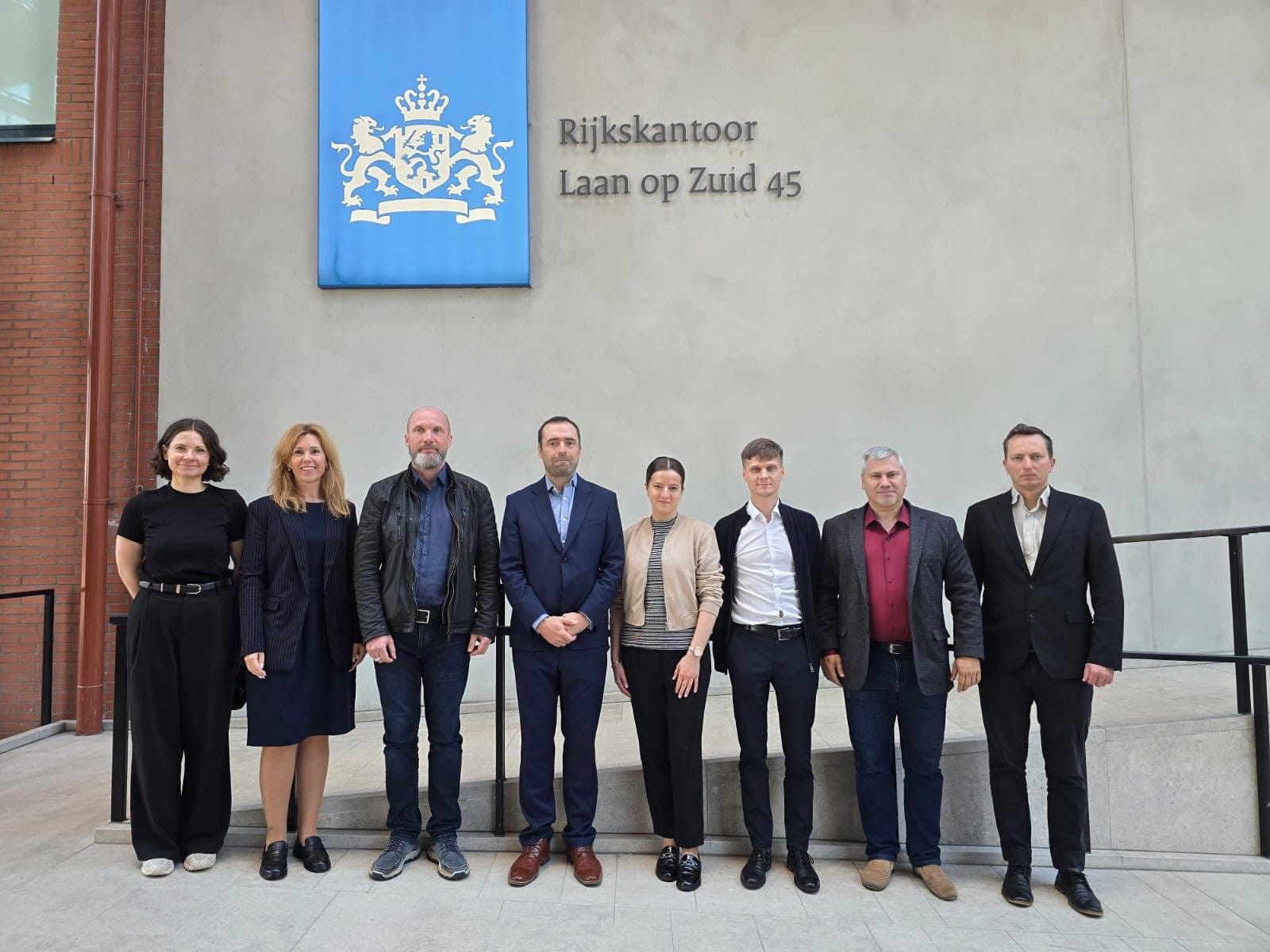
From experience to action: Latvia and the Netherlands share experience in investigating sanctions violations
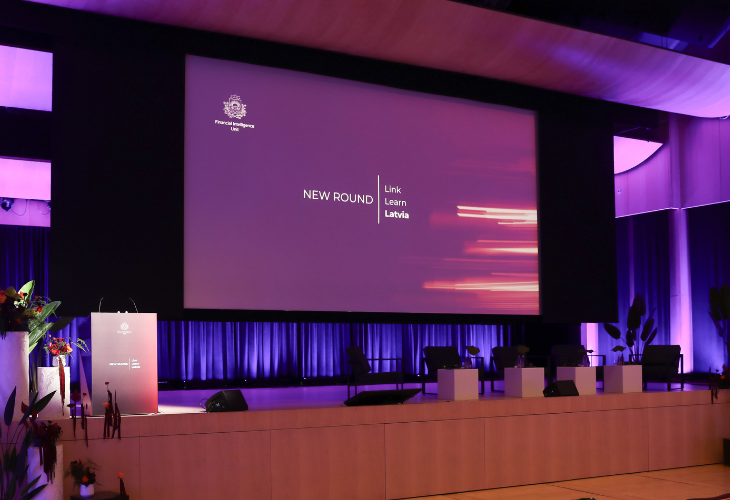
Latvian and Dutch experts are strengthening cooperation to more effectively detect and investigate violations of international sanctions. This fall, representatives of both countries met in The Hague and Riga, sharing experience and methods that help strengthen financial security in sanctions matters. Recognizing Latvia's role as the guardian of the EU's external border, in September this year, representatives of the Financial Intelligence Unit (FIU), Customs Administration of the State Revenue Service (SRS), the Tax and Customs Police Administration of SRS, and the State Security Service were invited to visit the Dutch Ministry of Finance's Investigation Service (FIOD) to hear about Latvia's experience, which has made investigating sanctions violations one of its priorities. During the visit, representatives of both countries shared their experiences, methods and suggestions on how to detect, investigate and hold accountable sanctions violations. The Netherlands' competence in investigating sanctions violations is considered one of the most effective internationally. In early November, the FIU hosted FIOD representatives to continue the discussions already underway and to encourage new ideas for improving internal processes. FIOD presented the FIU with practical examples of how investigations are conducted and what are the most important aspects that need attention. During this visit, representatives of both countries were once again convinced of the importance of building close bilateral cooperation to ensure the exchange of good practices and a reliable professional partnership. The valuable experience of FIOD was also available to a wider audience at the conference “Protecting the Border: Sanctions, Export Control and Corporate Responsibility” organized by the FIU on November 6, 2025. During the conference, Ruud Leeuwendaal, Head of FIOD’s Counter-Terrorism Financing and Sanctions Group, spoke about practical cases and consequences resulting from sanctions violations during a panel discussion. Conference recording (in Latvian) Conference recording (in English)
07.11.2025 14:58
FIU: Effectiveness of sanctions depends on concerted action and effective implementation
Russia’s full-scale war against Ukraine has been going on for almost four years, and sanctions are proving their effectiveness – they have significantly weakened, made it more expensive and more difficult for the aggressor to continue the war. Therefore, it is essential to continue the implementation of unified and consistent sanctions to maintain pressure on Russia and strengthen international security. This conclusion was made at the international conference “Protecting the Border: Sanctions, Export Controls and Corporate Responsibility” organized by the Financial Intelligence Unit (FIU), which brought together more than 120 participants from more than 20 countries - including experts from the European Union (EU), the United Kingdom, the United States and Canada. Sanctions as a security instrument, not just a political tool Opening the conference, Baiba Braže, Minister of Foreign Affairs of the Republic of Latvia, emphasized that sanctions are not just a formal political gesture, but a real instrument for stopping the war. “Sanctions are working and the data clearly shows that sanctions are having a significant impact on the Russian economy. Sanctions by the EU, the US, the UK and other international partners are effective and must be further strengthened to contain Russia and its co-aggressors. Together with our allies, we must continue to align sanctions against Russia’s energy sector and financial institutions, as well as continue to work on aligning sanctions against Russia and Belarus. Sanctions must also be targeted at entities in third countries that help circumvent sanctions and support aggression. We will continue to target sanctions on Russia’s energy exports, shadow fleet and its supporters until the aggression is stopped,” the minister said. The FIU head Toms Platacis also reminded that since the beginning of the war, FIU's main task has been to prevent Latvia's financial system from being used to circumvent sanctions. "The effectiveness of sanctions requires unity at the global level. Since Russia's full-scale invasion of Ukraine, both individual and collective understanding of the importance of sanctions and their practical implementation has increased significantly. An immediate response has turned into long-term sustainability - this is also evidenced by the rounds of sanctions imposed by the EU, with each subsequent one reaching increasingly important sectors of the Russian economy in order to critically reduce the likelihood of continuing to finance the war," said the FIU head Toms Platacis, emphasizing that the implementation of sanctions has become a strategic national security issue. Paulis Iļjenkovs, Deputy Head of the FIU, acknowledged that the centralization of sanctions enforcement in Latvia has been successful: “The decision to designate the FIU as the competent authority for sanctions enforcement has been successful, our country's practice is evaluated as a good example also elsewhere in Europe, namely, one institution provides explanations and ensures a uniform practice for applying sanctions. For sanctions to be truly effective, coordinated action and dialogue are necessary at the national and international levels.” Effective sanctions are based on unified action, consistency and accountability Sanctions against Russia are one of the most important tools to weaken the aggressor's capabilities and strengthen international security. Their effectiveness depends on three fundamental principles: close international cooperation, consistent implementation, and real accountability. First, an internationally coordinated sanctions policy among Western partners is a prerequisite for this instrument to work. Only united action can ensure that the aggressor cannot exploit the gaps between the regimes of different countries and that sanctions have maximum effect, both economically and politically. Secondly, consistent enforcement of sanctions is the responsibility of each country. Entrepreneurs must be aware of their risks and ensure compliance with the rules, while the state must create a clear and understandable system that allows companies to act accordingly. In Latvia, such a unified approach is provided by the FIU, which, as the competent authority in the field of sanctions enforcement, provides explanations, coordinates activities and ensures uniform practice in applying sanctions. Third, an effective sanctions system is inconceivable without holding violators accountable. Strict and fair application of penalties, as well as public information about these cases, strengthens trust in the sanctions mechanism and serves as a deterrent signal to anyone considering circumventing sanctions. Visible accountability creates confidence that sanctions are a serious, effective and fair security instrument. Sanctions – a long-term pressure mechanism Benjamin Hilgenstock, head of the Department of Macroeconomic Research and Strategy at the Kyiv School of Economics, said: “We need to create a system that clearly shows Putin and Russia that the longer the war continues, the more severe the consequences will be. Sanctions have already deprived Russia of the opportunity to earn about 100 billion euros in the energy sector. We need to be able to influence other countries that do not apply sanctions against Russia, and we should also think about additional measures at the global level”. At the conclusion of the conference, it was emphasized that sanctions are not the only tool, but a strategic pressure mechanism that must be maintained until the aggressor ceases hostilities and peace is restored. "The sanctions imposed by the EU have an effect, but their weak point is the different systems and implementation approaches of the member states. Latvia has established a centralized regime with effective data exchange and close cooperation with the Bank of Latvia, the Ministry of Foreign Affairs and customs. For Latvia, this is a matter of national security, while in other countries the approach may be relatively more relaxed," concluded Paulis Iļjenkovs. The conference “Protecting the Border: Sanctions, Export Controls and Corporate Responsibility” served as an important platform for dialogue between experts, policymakers and business people to strengthen a common understanding of the importance of sanctions and the effectiveness of their implementation. Conference recording (in Latvian) Conference recording (in English)
05.11.2025 15:49
At the international conference, industry experts will discuss sanctions, with a particular focus on export controls and corporate responsibility
Confirming Latvia's unwavering commitment to improving national and regional sanctions systems, as well as promoting international dialogue in the field of sanctions, the Financial Intelligence Unit (FIU) invites you to watch a live conference on industry news on November 6, 2025. The seventh annual conference “Guarding the Gate: Sanctions, Export Controls & Business Responsibilities” will provide in-depth insights into sanctions policy trends, judicial and supervisory practice, and corporate compliance strategies. The impact of sanctions on the economy and Latvia’s experience in sanctions enforcement will also be discussed. The conference will bring together experts in the field of sanctions in person and online. Experts in the field will share their experience at the conference, such as Baiba Braže, Minister of Foreign Affairs of the Republic of Latvia, John E. Smith, former Director of the US Office of Foreign Assets Control (OFAC), Tom Keatinge, Director of the Center for Security and Finance at the Royal United Services Institute (RUSI), Laila Medina, Advocate General of the Court of Justice of the European Union, Benjamin Hilgenstock, Head of the Macroeconomic Research and Strategy Department at the Kiev School of Economics, and other experts from EU Member States, the United Kingdom, Canada, and the United States. Conference agenda Main topics: Sanctions and security policy for the realization of strategic goals.The role of courts in shaping sanctions policy.Border security - the role of customs and export control.Sanctions violation investigation: specific cases and consequences of violations.Enforcement of sanctions in practice: the role and responsibility of businesses.Tracking cash flows: risks and responsibilities in the financial sector.The price of sanctions: impact on the Russian and global economies.Guarding Europe's external borders: Latvia's experience. The conference will be held in English with simultaneous translation into Latvian. If you have any questions, please contact us by e-mail: conferences@fid.gov.lv.
24.10.2025 10:30
Europe increases pressure: 19th round of sanctions targets Russia's energy and financial system – detailed explanation
The European Union (EU) member states have agreed to strengthen restrictive measures against the aggressor state Russia and its supporter Belarus, adopting the 19th sanctions package on October 23, 2025. The new round of sanctions will significantly affect Russia's energy sector, imposing a ban on the import of liquefied natural gas, the financial sector, restricting the issuance of payment instruments, and the shadow fleet, including 116 new shadow fleet vessels on the sanctions list. Key elements of the 19th round of sanctions The list of goods and technologies subject to export bans has been expanded to include goods that can be used to develop Russia's military capabilities. Goods that, due to their physical and chemical properties, can be used to develop Russia's military and defense capabilities, as well as be used in hostilities in Ukraine, include, for example, military rangefinders or various chemical alloys and metals used in the production of electronic devices, the export of which to Russia is prohibited. Ban on the import of liquefied natural gas (LNG) In order to negatively impact one of Russia's most profitable sectors, namely restricting the flow of electricity resources, the new round of sanctions imposes a ban on the purchase, import, and transportation of liquefied natural gas of Russian origin (or exported from Russia) from January 1, 2027. Stricter restrictions on cashless transactions Similar to the SPFS system created by the Central Bank of Russia, which was created in response to Russia's exclusion from the SWIFT network, the 19th round of sanctions prohibits transactions with certain persons using Mir (the Russian national payment card system) and SBP (Fast Payment System), which were created by the Central Bank of Russia or another legal entity registered in Russia. Measures to restrict crypto asset transactions Recognizing the risks that may arise from the use of crypto-assets to circumvent sanctions and finance war, EU Member States have decided to add to the list of transaction prohibitions those third-country financial institutions that provide services related to crypto-assets. Prohibition on issuing payment instruments The new round of sanctions prohibits the EU from issuing payment instruments to Russian nationals or natural persons residing in Russia, or to any legal person, entity or body established in Russia. A payment instrument is understood to be any personalised device and/or set of procedures agreed upon between a payment service user and a payment service provider and used to initiate a payment order. Potential, the development of which can contribute to Russia's military capabilities – SEZ ban Special economic zones, or SEZs, attract new companies with favorable tax rates, customs exemptions and other advantages for legal entities. Several such SEZs are located in different regions of Russia. The economic activities that take place in them can serve Russia's technological and industrial development, for example, unmanned aerial vehicles, combat weapons, military vehicles and other equipment that can be used for military purposes are produced under legally and economically favorable conditions. Recognizing the potential risks that attracting new companies to SEZs can pose, thereby strengthening Russia's military capabilities, sanctions prohibit any kind of involvement in the ownership structures of companies located in certain Russian SEZs, including establishing joint ventures, as well as concluding any kind of contracts with such companies. Prohibition of the provision of artificial intelligence, quantum computing and commercial space services In view of the rapid development of technologies, especially in the field of information technology, new restrictions have been imposed on the provision of services to persons registered in Russia in the following areas: artificial intelligence, commercial space services and quantum computing. The provision of such services can be used in the interests of Russia to develop its skills and technological solutions in geological exploration and the creation of precise geographical maps. Russia as an undesirable tourist destination In order to reduce the number of non-essential trips by EU citizens to Russia, the provision of tourism services to persons wishing to visit Russia on tourist trips is being restricted. Given that EU Member States are undesirable for Russia, citizens of Member States risk their freedom, which may be restricted under Russian jurisdiction. In such cases, EU Member States have limited diplomatic and consular possibilities to release their citizens and bring them to EU territory. The provision of services requires authorization from the competent authority. For the provision of such services (which are not prohibited) to Russian authorities, it will be mandatory to obtain a permit from the competent authority of the Member State. Before providing a specific service, the service provider will need to justify the need for this service. If the competent authority of the Member State decides to grant a permit after a thorough assessment of this justification, a permit will be issued on the basis of which the specific service may be provided. Prohibition of reinsurance for Russian aircraft and ships To reduce financial gain from selling old, unmaintained and unused aircraft and ships owned by Russia, it is prohibited to reinsure them for five years from the date of sale. Extended deadline for transactions to ensure the closure of companies owned by EU nationals in Russia Legal and natural persons of EU Member States with registered companies in Russia are being granted an extension of the deadline of 31 December 2026 for transactions related to the disposal or liquidation of these companies in Russia. The EU Member States reiterate that Russia is a country outside the rule of law, therefore, no reaction from Russia is foreseeable and decisions have been issued in relation to companies whose owners are from “undesirable countries”, including the European Union. This may lead to the risk of freezing the assets of such companies in Russia and other adverse actions against such companies. In particular, the EU calls for careful consideration and assessment of all possible risks for citizens of Member States who are considering establishing companies or joint ventures in Russia. Stricter travel restrictions for Russian diplomats A prior notification requirement is introduced for Russian diplomats and consular officials entering the Schengen area and Member States other than their Member States of accreditation. Member States will now have the right to prohibit Russian diplomats from entering their territory on the basis of entry documents issued by another country. List of partner countries for oil imports expanded The list of partner countries from which proof of origin is not required for imports of petroleum products, in accordance with Article 3ma of Regulation (EU) 833/2014 and Annex LI thereto, has been expanded to include Australia, Japan and New Zealand, in order to promote cooperation and energy security in Europe. EU sanctions lists have been supplemented with: 45 legal entities that support the Russian defense and security sector, including legal entities from third countries;eight credit institutions with which it is prohibited to engage in any transactions;116 “shadow fleet” ships or vessels, four ships removed from the list;four banks outside Russia that use the SPFS of the Central Bank of Russia, established by the Central Bank of Russia;six financial institutions that provide crypto-asset services;11 special economic zones (SEZs) , in which it is not permitted to be a participant, establish a new joint venture, entity or structure, as well as conclude contracts for the purchase of goods or services with a legal entity registered in one of the listed SEZs;one cryptoasset. Targeted financial sanctions set new definitions for the terms: “owned” and “controlled” The definition of the above-mentioned terms will strengthen legal certainty and uniform practice in the EU Member States. Until now, the EU institutions have explained these terms in the form of guidelines. Now the terms have been incorporated into the regulations and become legally binding. It is important to emphasize that the definitions incorporated in the regulation correspond to the definitions previously explained by the EU institutions, therefore the practice of applying the terms will remain unchanged. New definitions have been established in Article 1 of Regulation (EU) 833/2014 for the following terms: “crypto -asset”“payment services”The reference to “related parties” in Article 2 of Regulation (EU) 269/2014 has been removed . Annex I to Regulation (EU) 269/2014 may further include persons involved in criminal offences against Ukrainian children and their assimilation in the interests of Russia, including deportation, forcible transfer and Impact of the 19th round of sanctions on Belarus In order to avoid the risk of possible circumvention of sanctions through Belarus, the elements of the 19th round of sanctions are also applicable to Belarus. Almost all of the above-mentioned prohibitions or restrictions, for example, in connection with the addition of new goods that can be used for the development of the military sector to the export ban list, restrictions on the provision of artificial intelligence services, restrictions on transactions using crypto assets, etc. Additionally, restrictions have been imposed related to the provision of computer software development, installation and maintenance services. A more detailed summary of the 19th round of sanctions. More information about the new round of sanctions is available in the Official Journal of the EU . To help entrepreneurs develop and implement a set of measures, or internal control system (ICS), to mitigate and manage sanctions risks in transactions with merchants in countries with increased sanctions risk, the FID has published guidelines “Managing Sanctions Risks in Transactions with Increased Risk Countries”. Since April 2024, the FID has been the national competent authority for sanctions enforcement issues in Latvia.
07.10.2025 11:47
UN Security Council renews sanctions against Iran
The United Nations Security Council (UNSC) has decided to renew several sanctions regimes against Iran, originally imposed in 2006 to stop the country's potential development of nuclear weapons, from 28 September 2025. The sanctions were suspended in 2015, but on 25 August this year, Britain, France and Germany informed the UNSC of Iran's material non-fulfillment of its obligations. This gave Iran 30 days to find a diplomatic solution and prevent the sanctions from being reinstated - a deadline that expired a week ago. The renewed sanctions include six UN Security Council resolutions: No. 1696 (2006) requires Iran to suspend all uranium enrichment-related activities and prohibits other countries from transferring missile technology to Iran;No. 1737 (2006) prohibits the transfer of proliferation-related technology to Iran, and imposes an asset freeze and travel restrictions on proliferation-related individuals and entities. Currently, sanctions target 43 individuals and 78 entities ;No. 1747 (2007) adds to the list of sanctioned entities and imposes financing restrictions on Iran;No. 1803 (2008) adds to the list of sanctioned entities and strengthens control measures to more effectively monitor the implementation of sanctions;No. 1835 (2008) confirms commitment to sanctions;Resolution 1929 (2010) imposes comprehensive sanctions, including a complete arms embargo and a ban on Iran investing in the development of foreign missile technology. Additional information is also available on the website of the Ministry of Foreign Affairs. In accordance with the first paragraph of Article 11 of the Law on International and National Sanctions of the Republic of Latvia, sanctions imposed by resolutions of the United Nations Security Council and sanctions imposed by European Union regulations are binding and directly applicable in the Republic of Latvia.
01.10.2025 12:13
Latvia shares experience on the implementation and effectiveness of sanctions
Paulis Iļjenkovs, Deputy Head of the Financial Intelligence Unit (FIU) for Sanctions, spoke at a public hearing of the European Parliament's Committee on Economic and Monetary Affairs (ECON) on the implementation and effectiveness of European Union (EU) financial sanctions against Russia. The discussion was also attended by John Berrigan, Director-General for Financial Stability, Financial Services and Capital Markets Union of the European Commission. "Currently in force, financial sanctions are strong, but member states need to improve their implementation in practice. Without a more uniform application of sanctions, their impact on Russia will be less than possible," emphasized Paulis Iļjenkovs. Photo: from left: John Berrigan, Director-General of the European Commission for Financial Stability, Financial Services and Capital Markets Union, and Paulis Iļjenkovs, Deputy Head of the Financial Intelligence Unit for Sanctions. In his speech, the FIU representative emphasized three important aspects: The EU's financial sanctions against Russia are strong and influential – they include an asset freeze of approximately €25 billion, the immobilization of the Russian Central Bank's reserves of approximately €210 billion, as well as capital market restrictions, transaction bans and other measures.Their impact directly depends on a unified and coordinated implementation. Latvia has established a centralized approach: unified sanctions enforcement, a verified register of frozen assets, close monitoring of payments and trade flows, extensive guidelines for entrepreneurs, and already around 600 criminal proceedings, mostly for violations of trade sanctions.Regularly assess which financial sanctions are most effective and focus the activities of customs, financial intelligence units, law enforcement and compliance teams on those areas where results are strongest. The discussion also raised the risks of circumventing sanctions, including through third countries and cryptocurrencies. P. Iļjenkovs pointed out that, thanks to the EU's 19th sanctions package, it is also possible to target cryptocurrency service providers located outside the EU that help Russia evade sanctions. The possibility of using frozen Russian assets as collateral for loans to Ukraine was also discussed, as well as strengthening measures to confiscate funds related to criminal activities of Russian oligarchs. More information and a recording of the discussion can be found here.